Consuming to Survive: When Necessity Becomes Disorder
What is Disordered Consumption?

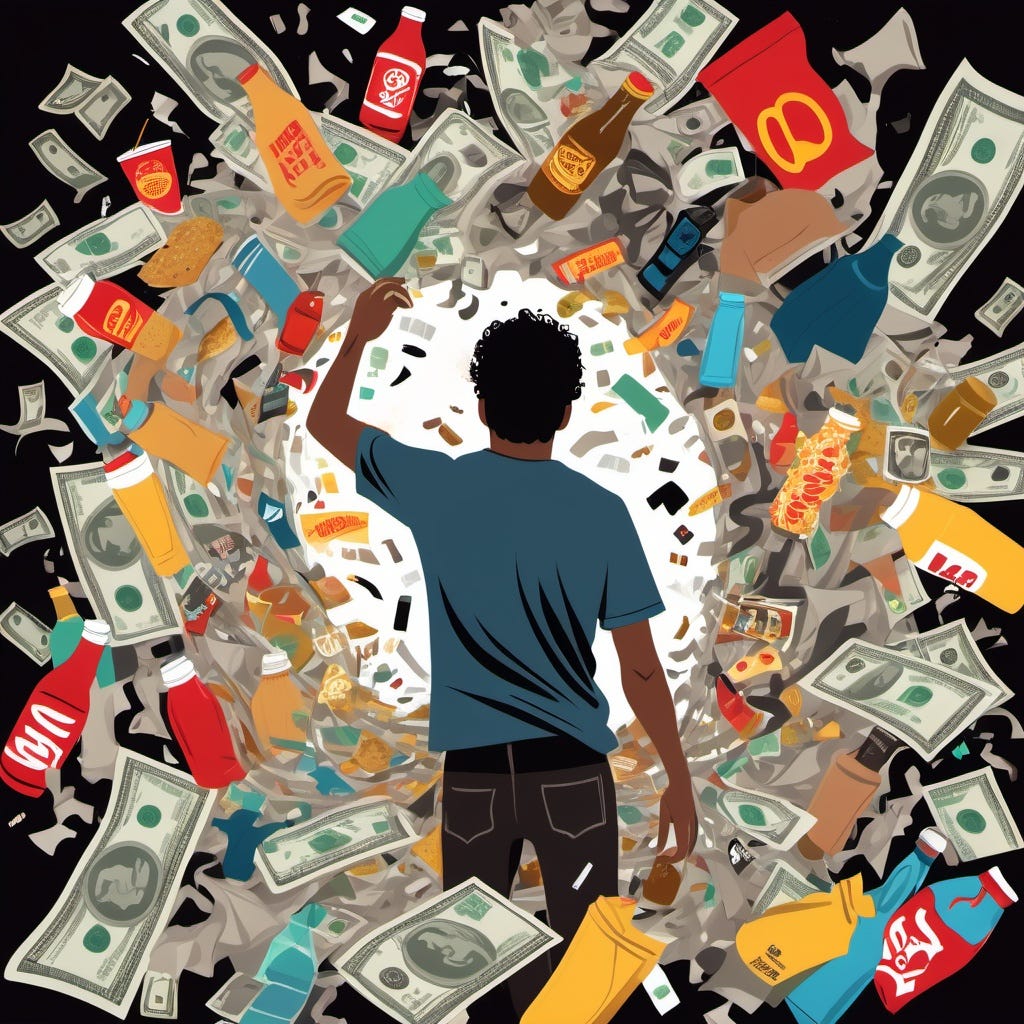
At its most basic level, humans need to consume to survive. We eat, drink, and breathe because our bodies demand it. But when we zoom out, it’s clear that consumption isn’t just about biology. Consumption contains culture, identity, and meaning. When human emotion mixes with societal norms, that’s where things get tricky.
In today’s world, the line between what we need and what we want is increasingly blurred. Food, a biological necessity, is now a battleground for dieting trends and Instagram-worthy meals. Shopping for necessities morphs into chasing luxury brands or emotional comfort through "retail therapy." Even social media, intended to enhance connection, has become a platform where overconsumption of content, information, and validation fuels the anxiety of comparison.
But why does this happen? And how do our survival-based instincts to consume get distorted in cultural expectations?
From Survival to Consumerism
At its heart, consumerism transforms "surviving" into "thriving"—or at least the illusion of it. We’re taught that happiness and identity can be purchased, whether through food choices, gadgets, or experiences. Yet this shift can be problematic when consumption becomes a way to cope, avoid, or mask deeper struggles.
Consider:
The way food and body image can be weaponized in diet culture, leading to disordered eating patterns.
How social media fuels a compulsive need to consume content, often leaving us feeling inadequate out of fear of “being left out” or not being “connected”.
The financial and emotional strain of chasing material goods to "keep up" with societal expectations of the status a image can provide.
The C3 Cycle offers a powerful lens to examine how our consumption habits can spiral into disordered behaviors. This cycle highlights three interrelated forces:
Compulsion: A strong, often unconscious, urge to consume or act. This can manifest as binge eating, overspending, or doom-scrolling on social media in response to stress, boredom, or unmet emotional needs.
Consumption: The act of fulfilling that compulsion, often impulsively. This brings temporary relief but can leave a person feeling guilt, shame, or distress.
Control: A reaction to the discomfort caused by consumption often triggers efforts to "fix" the problem—such as restrictive dieting, extreme budgeting, or detoxing from technology. However, these solutions can feel punitive and unsustainable, leading to frustration and a sense of failure. Once control is perceived as lost, it can serve as a justification to fully surrender to the cycle, reinforcing the compulsion to consume and perpetuating the pattern.
For example, someone who struggles with disordered eating might binge on comfort foods during stressful times (compulsion), feel guilty afterward (consumption), and try to regain regulation by severely restricting their diet (control). This restriction only heightens the compulsion to binge again, reinforcing a harmful loop.
Distorted Consumerism and the C3 Cycle
The C3 Cycle doesn’t just apply to individuals—it also mirrors how consumer culture operates. Advertisements, social media, and societal pressures amplify compulsions by creating a sense of urgency or inadequacy (“Buy now!” or “You’re missing out!”). Once we consume, we’re often left wanting more, fueling a cycle of dissatisfaction and control that feeds the larger machinery of consumerism.
Disordered consumption often stems from a misalignment between what we truly need and what we think we need. It’s a disconnect fueled by external pressures and internal struggles—emotions, trauma, neglected basic needs, etc. For example:
Emotional eating, drinking, or drug use as a way to soothe stress or pain.
Overworking and overachieving, consuming energy and time, to gain validation.
Compulsive shopping as a temporary fix for feelings of inadequacy or loneliness.
By understanding the C3 Cycle, we can recognize the patterns in our behavior and work toward disrupting them.
Starting the Conversation
Understanding why we consume—and how it can become disordered—is a crucial first step. Here are some questions to consider:
What are your consumption habits, and do they align with your actual needs?
Are you consuming (food, goods, media) to fill a void that could be addressed differently?
How can we create a culture that respects necessity without glorifying excess?
Consumption isn’t inherently bad—it’s essential to survival. But when it becomes a source of harm, it’s time to pause, reflect, and recalibrate. Let’s explore together how we can reclaim our relationship with consumption and build healthier, more intentional habits.
~ Jaelyn Vickery, MSW, LSW